Have you experienced a situation where everything seems quite fine during the day, but in the evening your vision becomes blurry, contrast fades, and your eyes get tired quickly? Driving feels more exhausting, walking downstairs feels uncertain, and your phone screen needs to be brighter than before.
Seeing worse in low light usually does not happen overnight. Most often, the body gives signs earlier: your eyes sting, your head feels heavy, and letters start to blend together. Many people get used to this discomfort, even though the situation can actually be improved with fairly simple steps.
Below you will find explanations of why vision worsens in low light and how you can improve it comfortably.
How do eyes work in low light?
In darker environments, the eyes have to work harder. In bright light, strong contrast and plenty of light help keep vision sharp, but in low light the eye must use light much more efficiently. Cells in the retina that detect light become more active, but they do not see details as clearly.
If your eyes are tired, dry, or your vision correction is no longer accurate, this process becomes even more difficult. The image does not just look darker, but also less precise – edges blur and judging distance becomes harder.
Why does vision in low light worsen over time?
One of the most common reasons is daily eye strain. Computer work, phones, artificial lighting, and reduced blinking put stress on the eyes already in the morning. By the end of the day, the eye muscles are tired and the surface of the eye is drier than usual. In this state, it is hard for the eyes to adapt quickly to low light.
Another important reason is changes in eyesight. Even a small change in prescription can go unnoticed during the day, but becomes obvious in the evening. The eye tries to compensate by itself, which causes extra strain and fatigue.
Nutrition, sleep, and age also play a role. From the mid-thirties, the eye lens becomes less flexible and adapting to light takes more time.
How does incorrect correction tire your eyes during the day?
If your vision correction is no longer accurate, your eyes work all day with a small “deficit.” This means the brain and eye muscles constantly try to sharpen the image.
This can result in:
-
mild headaches after work
-
feeling like you want to squint
-
difficulty reading text
-
blurry vision in the evening
Many think it is just normal tiredness, but in reality the eyes often need more accurate correction with glasses or contact lenses.
Why do contact lenses help you see better in low light?
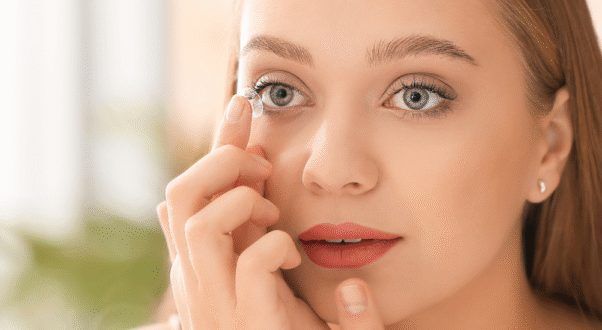
Contact lenses move with the eye and sit directly on its surface. This gives several advantages, especially noticeable in dim light.
First, the field of vision is wider. Frames and lens edges do not limit what you see, and the image stays more even. In low light, this helps you notice movement and distance better.
Second, there are fewer reflections. Streetlights, car headlights, and light from windows can reflect off glasses and disturb vision. With lenses, the image stays cleaner and calmer.
Third, correction is more precise. Because the lens sits directly on the eye, small distortions that can occur with glasses – especially at the sides – are avoided.
When you use contact lenses with the right strength, your eyes no longer need to strain to focus. This reduces daytime fatigue and improves vision quality in low light.
How to choose lenses for everyday use?
Start with an eye check. Even if you have used lenses before, it is good to review the prescription from time to time. Eyes change slowly, and old correction may no longer be suitable.
After that, choose lenses that match your lifestyle:
Also use care products regularly to keep the eye surface clean and moist. This helps prevent irritation and keeps vision clear in the evening too.
What else can you do to see better in low light?
Contact lenses provide a strong base, but daily habits help even more.
During the workday, rest your eyes consciously. Every 20 minutes, look out of the window or into the distance. Blink calmly a few times to moisten the eye surface.
In the evening, avoid very bright screens in a dark room. When the difference between room light and screen light is big, the eyes must constantly adapt, which increases fatigue.
Drink enough water and sleep well. Eyes recover mainly during sleep.
How often should you check your eyesight?
If you wear lenses or glasses, have a check-up at least once a year. Do it sooner if:
-
evening vision becomes noticeably worse
-
your eyes get tired faster than before
-
headaches become more frequent
A convenient way to use lenses every day
Many people postpone buying new lenses until their supply runs out. Sometimes they run out unexpectedly just before a trip or a busy work period.
A subscription helps avoid this worry. New lenses arrive at home regularly, without needing to remember dates. This keeps vision consistent and sharp even in low light.
Poor vision in low light is not something you simply have to accept. Often the cause is eye fatigue and inaccurate correction. If your eyes have to strain all day, it is natural that the image becomes blurry in the evening.
Properly chosen contact lenses help your eyes work more calmly, reduce daily strain, and improve vision quality in darker conditions. Together with good habits and regular check-ups, you can keep your eyes rested every day.